



An ancient heresy has crept into the American Evangelical imagination. It’s subtle, easy to slowly adopt without even recognizing the syncretism you’re engaged in.
In fact, when Paul and other members of the Early Church warned against this heresy, it wasn’t because people were “leaving the faith for it,” but because they were mistakenly incorporating elements of it into their Christian faith.
This heresy is called “Gnosticism.”
Gnosis literally translates into “knowledge.” Ancient gnostics believed that the physical world was inherently evil, that salvation came from arriving at the right “knowledge,” and that the goal of life was to be liberated from this world and released to a spiritual plane, enabled by knowing the right things.

Early Christians had to address Gnosticism seeping into the Church and disembodying our faith. It reduced Christianity simply to revelation, to knowing the right things, and, since the world was evil and to be done away with anyways, resulted in a sort of “escapism” and abdication of moral responsibility and proactive presence.
So how has Gnosticism seeped back into much of the American Church today? I’ll touch on three ways, though you may note there are other hints of its presence in our culture beyond these.
First, Gnostic Escapism
Let’s start with the escapism. Rapture ideology and dispensationalism has primed an entire generation with the belief that this world is destined for destruction and we fortunate elect will escape those horrors into a disembodied heavenly reality.
That is not the Gospel. As N.T. Wright argues in Surprised by Hope, the Gospel is about the restoration of all things, the eventual resurrection to eternal life in everlasting bodies, and the overall emphasis on the here and now, not there and then.
“For God was pleased to have all his fullness dwell in him, and through him to reconcile everything to himself, whether things on earth or things in heaven, by making peace through his blood, shed on the cross.” - Col. 1:19-20
The Gospel invites us into continual participation in this ongoing work as we prepare the way for our eventual returning King.
“Everything is from God, who has reconciled us to himself through Christ and has given us the ministry of reconciliation.” 2 Cor. 5:18
Think less Left Behind, more Return of the King; Gondor restored, not abandoned.
Second, the Disembodiment of Sacraments
Point number two: our wispy reduction of the physical sacraments God has granted us.
A huge proportion of the American Church has reduced communion to a mere moment to consider what Jesus did for us. This approach is called “Memorialism” and it is not in Scripture.
It also was never taught by anyone in the Church for about the first 1500 years of our faith, originating with Zwingli. This is an innovation, one I grew up under myself. But communion is not just a chance to think about Jesus and what he did for us.
It is an opportunity to uniquely experience the presence and grace of Christ, participating in his sacrifice just as the Hebrews who ate the Passover Lamb in Exodus participated in the sacrifice of that lamb for them. Something unexplainable happens in this holy sacrament.
Or how about baptism? Much of modern evangelicalism has somehow gotten the idea that baptism is a mere profession of faith, something we’re just commanded to do, but just like we’re commanded to do good.
This is not how the Church has ever seen baptism until relative modernity. There is not a single time in the Bible in which someone comes to faith and remains unbaptized. Yet in much of the Evangelical Church we see people baptized 10 years after coming to faith, or even never at all. That’s a failure in discipleship.
To be baptized is to physically exercise your joining to the Body of Christ. Baptism is a part of becoming a Christian, again, in a holy mystical way in which a spiritual reality of our faith is physically embodied.
And this kind of leads to my third point.
Third, the Mere “Spiritualization” of Christianity
Becoming a Christian is not reciting a passcode. It is not a magic spell. It is not downloading the “right information,” simply knowing or even intellectually assenting that Jesus is God and he died for you.
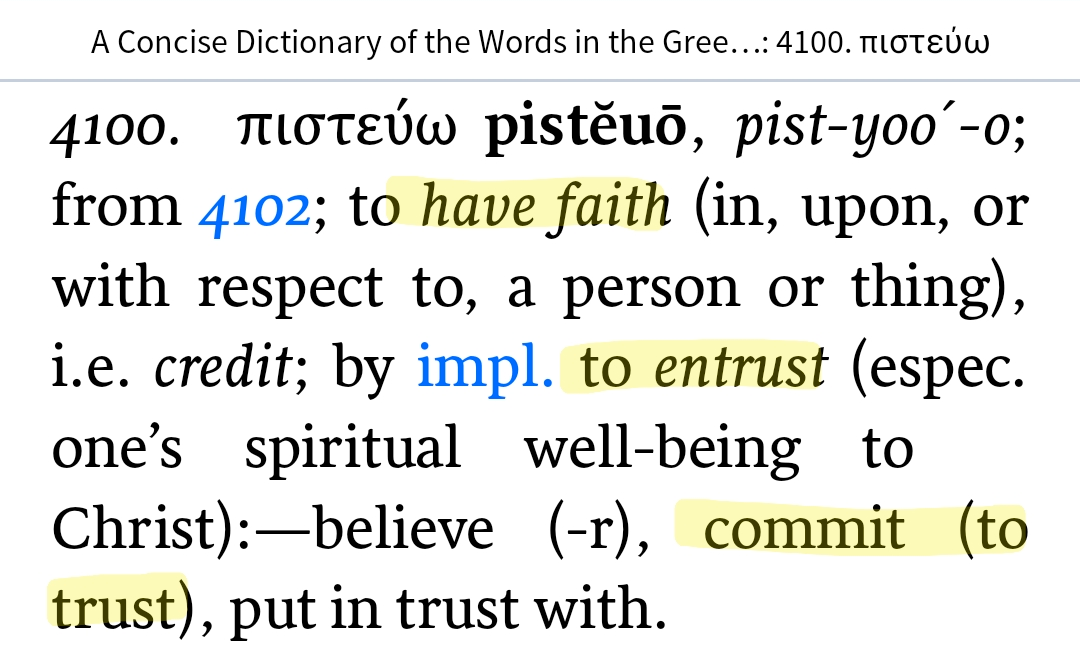
The Greek word translated as faith in Scripture, pistis (or pisteuo in verb form), translates perhaps best as “allegiance,” (as argued by Matthew Bates in Salvation by Allegiance Alone), or “entrusting oneself to,” and with that comes certain things, including the Fruit of the Spirit.
John Calvin and Martin Luther both clarified this in their own words.
“We are not saved by works; but if there be no works, there must be something amiss with faith.” - Luther
“It is therefore faith alone which justifies, and yet the faith which justifies is not alone: just as it is the heat alone of the sun which warms the earth, and yet in the sun it is not alone, because it is constantly conjoined with light.” - Calvin
A mistake common to Evangelicalism is that we often divorce Christian faith from Christian life, allowing one to be claimed without the other.
One cannot be a soccer player and not play soccer. A true Christian identity, trusting oneself to Christ, will be reflected by Christian pursuit of Christ and His ways.
In Hebrews 11, the faith of the heroes who preceded us is described in their physical exercises of faith, not mere intellectual assent.
Perfection is not expected, but physical expression of faith, real pursuit of Christ’s ways, is.
We need to be very careful to reject the efforts of the same demons active today who snuck this false philosophy into some of the very churches Paul confronted in the New Testament.
Do not reduce Christianity to spiritual fufu.
Embrace Our Real, Tangible, Embodied Faith
The Christian life is embodied. It is physically expressed. It bears tangible fruit. It partakes in the sacraments. It lives as a member of Christ’s Church, global in reality, local in expression.
This is why I hate the phrases, “It’s a relationship, not a religion,” or “I’m spiritual, not religious.” They are two sides of the same coin, as the Christian “religion” is good, and it is merely the corporate embodied exercise of our Christian faith.
“Pure and undefiled religion before God the Father is this: to look after orphans and widows in their distress and to keep oneself unstained from the world.” James 1:27
Christianity includes real religious observance. It is represented in both the spiritual and the physical. And that is good.
Exercise pistis. Be the goodness of God to this world, as the embodiment of Christ we are collectively described as.
“Now you are the body of Christ, and individual members of it.” 1 Cor. 12:27
I'm going to share this with my mom. We struggle to discuss religion because she belongs to a dispensationalist evangelical church and I walked away from that 4 years ago. I'm hoping it leads to some conversation if nothing else.
However, the one example of a person coming to faith and not being baptized is the thief on the cross. Because that is one of the main reasons that I was given growing up for why baptism isn't necessary to get to heaven and "is only a public declaration". As an adult I've tried to point out extenuating circumstances (he literally couldn't) and that it was Jesus who said he would be in paradise. As well as the fact Jesus was baptized and sent disciples to baptize, the story of the eunich etc etc etc but the main sticking point is thief on the cross, that one situation seems to outweigh all the others in that particular sect of evangelicalism.
Love this—and especially that you’re banging the drum about the resurrection of the body and the restoration of creation.
I’m less sure about the statement that we can date this all the way back to Paul’s time. 1 Corinthians 15 and a few other passages may allude to a form of what might be called proto-Gnosticism, although even that is controversial.