


What do the following two things have to do with each other and what lessons can we draw from their relation?
1) Christian Revival in the Second Great Awakening
2) The US Civil War
First, a bit about the Second Great Awakening. Let’s get into it.
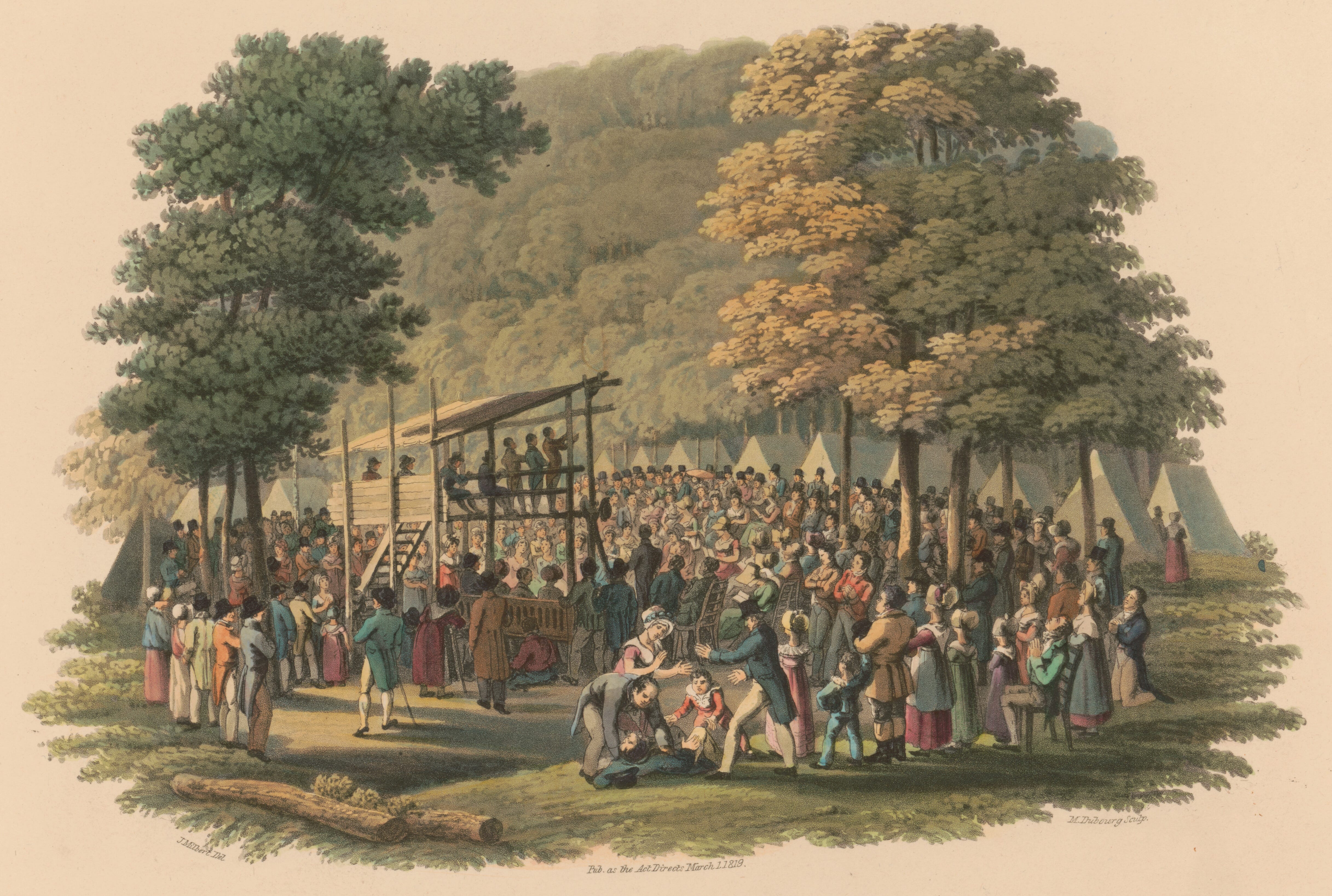
The Second Great Awakening was a Protestant religious revival that took place in the United States from roughly 1790-1840. It was characterized by widespread evangelism, engaging and relevant preaching, and mass gatherings known as camp meetings. This movement significantly reshaped American religion, culture, and society.
Methodists and Baptists in this time went from membership totaling around 120,000 between them to over 1 million members each over this period in the US. This event shaped American faith and society in ways even felt today.
The Context Prior to This
It's important to know the context of Christianity as many understood it up until this point in the US. You might be surprised to learn this: while most Americans identified as "Christian" in the 1700s, it's estimated that only 10%-20% were active members of local churches in the late 18th century, with some estimating it as low as 5%-10%!
In his book, A History of Christianity in the US and Canada, Notre Dame historian of American Christianity Mark A. Nolls writes, "Still, the churches were definitely disorganized in the wake of the revolution, and the role of Christianity in the new national culture was anything but secure.
“While church adherence remained high at least into the 1770s (with perhaps as much as 40 to 50 percent of the population attending church with some regularity), formal church membership was sinking, and in the 1790s reached an all-time low (somewhere between 5 and 10 percent of the adult population)."
While most Americans did attend church every so often (not too different from most today), at the time of the Second Great Awakening "cultural Christianity" was increasingly becoming the standard across most of the country (also much-like today).
It’s important to keep in mind that this was the era of the Enlightenment, with such philosophers as Voltaire, David Hume, and Diderot critiquing organized religion and existence of the supernatural quite harshly. While many still identified with Christianity in the fledgling US, the Enlightenment seems to have trickled down in such a way that Christian faith had a decreasing bearing on everyday life for many.
Among the intellectual elite, Deism, a product of the Enlightenment, was growing in popularity by the latter 1700s, a belief that posited God existed, but in the same sense in which a clock maker creates and winds a clock and then never necessarily interacts with it again. God was simply Creator, not a being to be known and followed personally.
The extent to which Deism ever caught on with the more general population of the US is often exaggerated, but the belief was certainly prevalent among many leaders in the country. Ultimately, the Enlightenment era appears to have largely negatively impacted American culture and personal engagement with God. However, things changed rapidly with the Second Great Awakening.
A Fresh Revival
The Second Great Awakening (2nd GA)was a major Protestant religious revival that swept through the United States for about half a century, beginning in the 1790s. As Enlightenment ideals of reason and individualism had begun to influence society, God’s people took proactive action in response to a perceived decline in religious commitment and church attendance in the years following the American Revolution.
The core message of this Awakening was that salvation was available to all through personal faith and repentance, and this democratized approach to religion greatly appealed to the common people. A relevant and living faith was preached, specifically; not just one of belief, but of redemption and subsequent moral action. This personally-relevant faith brought tangibility and demanded actual participation from believers, contrasting sharply against the direction of practice Christianity had been heading in for some time in the US.
Moral and Societal Relevance
The 2nd GA thus coincided with (and drove) significant social changes in the US, such as the continued democratization of society and the rise of new social issues.
Remember, at the founding of the United States, only white male landowners could vote. As of 1800, only three states had no land ownership requirements for voting. By 1830, this had increased to 18 of the 24 US states of the time (although 8 of those still had tax-paying requirements) and the trend was decidedly headed in the direction of universal suffrage, although it would still be many years before non-white Americans and women received the right to vote.
Social issues advanced during and due to the 2nd GA included the abolition of slavery, temperance, women's rights, and prison & education reform. With one's personal salvation, reconciliation, and duty to God heavily emphasized, the Awakening led not only to a spiritual revival in the country and DOUBLING of church membership rates), but also to a moral revival.
Many abolitionists, such as William Lloyd Garrison and Frederick Douglass, were motivated by the religious fervor of the Second Great Awakening. The movement framed slavery as a moral evil that needed to be eradicated, significantly contributing to the antebellum push against slavery.
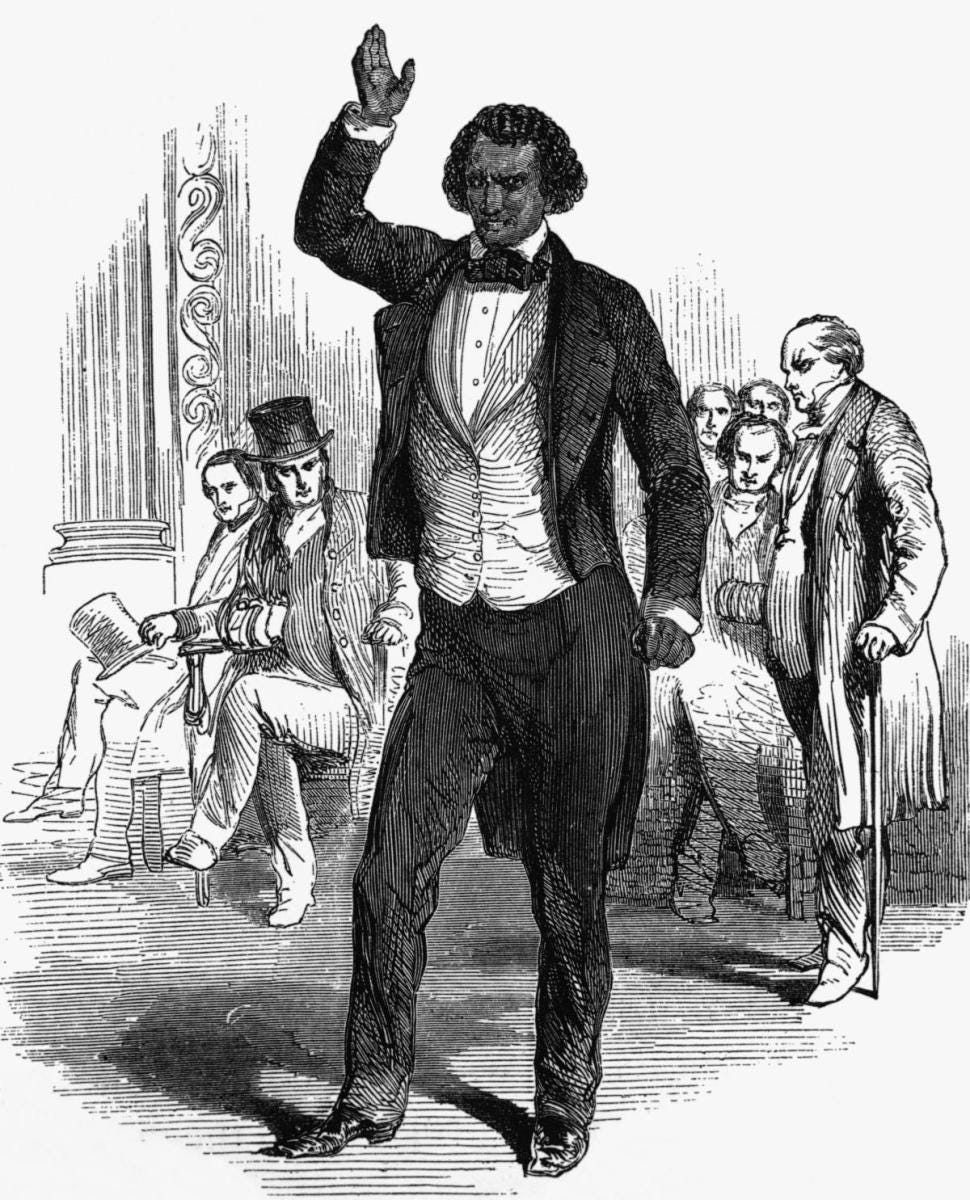
This is why Southern Christians who wished to maintain slavery felt they had to split from their denominational core (e.g. the SBC leaving Baptists). Evangelical denominations, particularly in the North, were outright in their abolitionism.
Georgetown historian Chandra Manning writes of religious sentiment in the North, "‘Thy Kingdom come’ was more than just words; ‘Thy Kingdom come’ meant wholesale social reform aimed at rooting out all evils that separated humanity from God. Temperance societies targeted the demon liquor. Other idealists sought prison reform, asylum reform, equitable relations between the sexes and in the family, and more. Religiously motivated abolitionist societies took aim at the sin of slavery."
How This Led to the Civil War
As slavery became increasingly villainized and to be seen as morally contemptible (and rightly so), the views of Abolitionism became prevalent throughout the North and, increasingly, into the American West.
This put those in favor of slavery on the backfoot, as they saw that the inevitable direction of the country was one in which the institution of slavery would decay and decline until it was no longer tolerated at all, first in new states, and then perhaps even in their own.
To Southern leadership who greatly benefitted from the institution of slavery, this was intolerable. They couldn't just let their "way of life" (as they put it) and economic system (more accurately put) crumble to moral pressures.
And so they decided they must permanently sever from this nation which they saw as headed in an irreconcilable moral direction from their own.
While the South was wrong to rebel, they were not wrong about the moral direction of the country after the revival of the Second Great Awakening. The writing was on the wall.
It is often underappreciated just how large of a role the Second Great Awakening had on slavery's decline and the ultimate head things came to in the US Civil War. Without that revival, there's a great possibility the conflict would have been delayed or played out differently.
Why This Matters Today
All of this to say, this isn't just interesting history. It's relevant for us today. It was the religious shift among Americans that drove the societal change that ultimately would see slavery abolished in the country.
Rather than a dutiful minority of Christians attempting to wrest control of the state and remake society into God's image by force, you had dutiful Christians bring 2 million people to Christ in a nation with barely more than 10 million people.
As people came to Christ, society became increasingly Christ-like in morals and direction, until it became clear that slavery's abolition in the US was an inevitability unless the South were to secede (and so they did).
The lesson for us is in how these forefathers in the faith didn't put the cart before the horse. They brought people to Christ first, and then society became more Christian naturally. This is a strong blow to Christian Nationalism, and can even inform how we talk about abortion.
Relevance to Abortion
The abolition of Roe v. Wade is something that I see as a step in the right direction. However, no spiritual foundation is being laid among the populace for the moral Christian progress so many are aiming for.
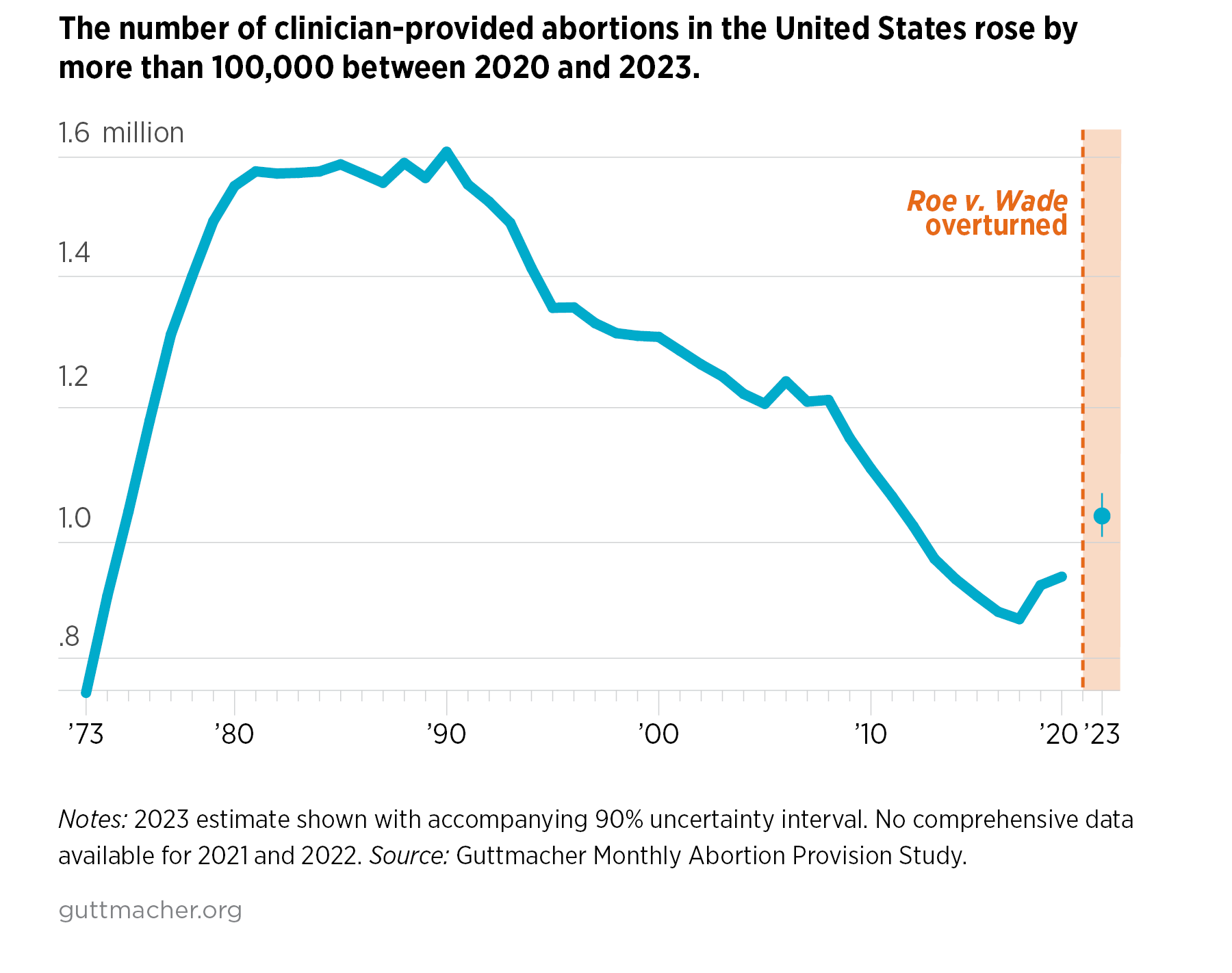
While we focus on passing laws or repealing others, the real rate of abortions is actually going UP! We reached 1 million abortions for the first time in years in 2023, with rates increasing dramatically so far in 2024 as well (the below chart only includes the first three months of 2024, but the trend has only continued increasing for monthly counts).
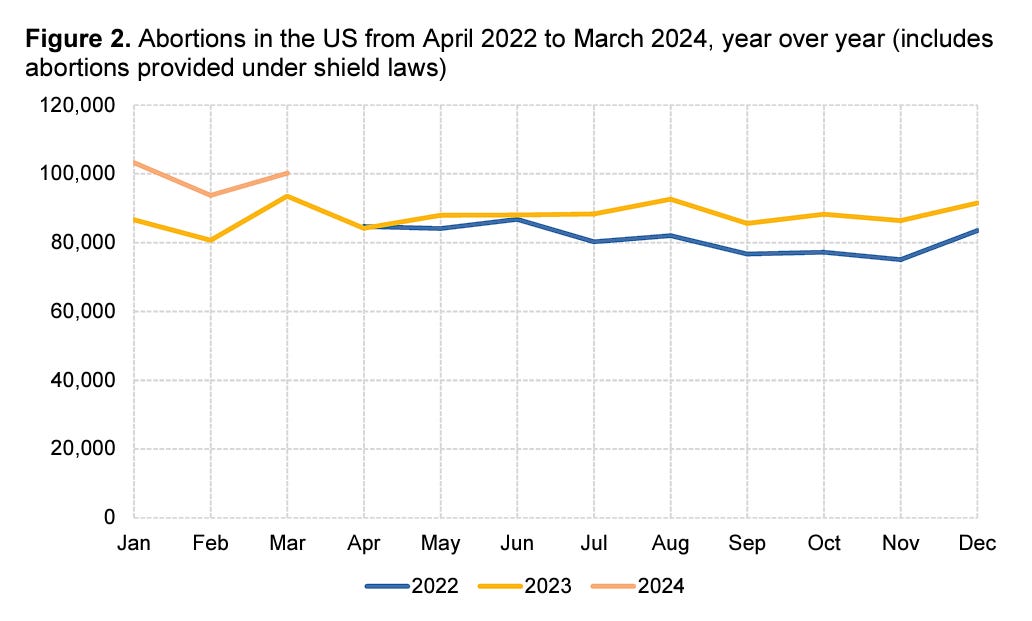
Do improved and more moral abortion laws and restrictions even matter if ultimately more babies are dying despite the legal changes?
Maybe we’ve focused so significantly on aligning our nation’s morals to Christ by political force that we’ve neglected the mission to actually disciple and align individuals hearts to Christ in the process?
The lesson of the Second Great Awakening for us is that social change can be driven by religion, but it must be rooted in a revival of actual personal faith, not top-down enforcement. It is changed souls of persons that lead to the changed soul of a country.
It's worth noting an intertwining of nationalism and faith was much more the approach of Southern Christianity during the Civil War.
Dr. Manning writes, "Once the Union divided, civil religion took up the job of forging Confederate national identity, in which the Confederacy was a Christian nation, the cause of the Confederacy was God’s cause, and patriotism and religious duty were one and the same. Analyses of Confederate civil religion explained that to Confederate believers, the Confederacy shone as God’s chosen Kingdom on earth..."
That's concerningly reminiscent of some voices I hear even today.
Remember:
The Gospel in hearts --> the Gospel in our lands
No Gospel in hearts --> distorted "gospels" in our lands
If Christianity is just a tool or means to an end, the ends it serves will not ultimately be trustworthy, nor ideal. It must be the foundation, independent of politics. We must focus on the nitty gritty transformation of lives, one at a time, ushering in Christ’s Kingdom on Earth by introducing people to the regeneration, renewal, and redemption available through Christ alone.
With that accomplished in thousands of local churches, in millions of relationships of discipleship, reaching a societal level, we will subsequently see societal moral change.
“Do not be conformed to this age, but be transformed by the renewing of your mind, so that you may discern what is the good, pleasing, and perfect will of God.” Romans 12:2
Remember the source of the renewal of our minds. The World’s gonna world. Church, just keep churchin’. And as you bring more people into relationship with Christ, you’ll gradually see the World look more like a place inhabited by the people of Heaven.