


The Context of This Conversation
There can be no doubt that the population of Muslims in the US is growing. While Muslims historically have made up less than 1% of the US population, their share of the population is expected to rise to as high as 2.1% by 2050.
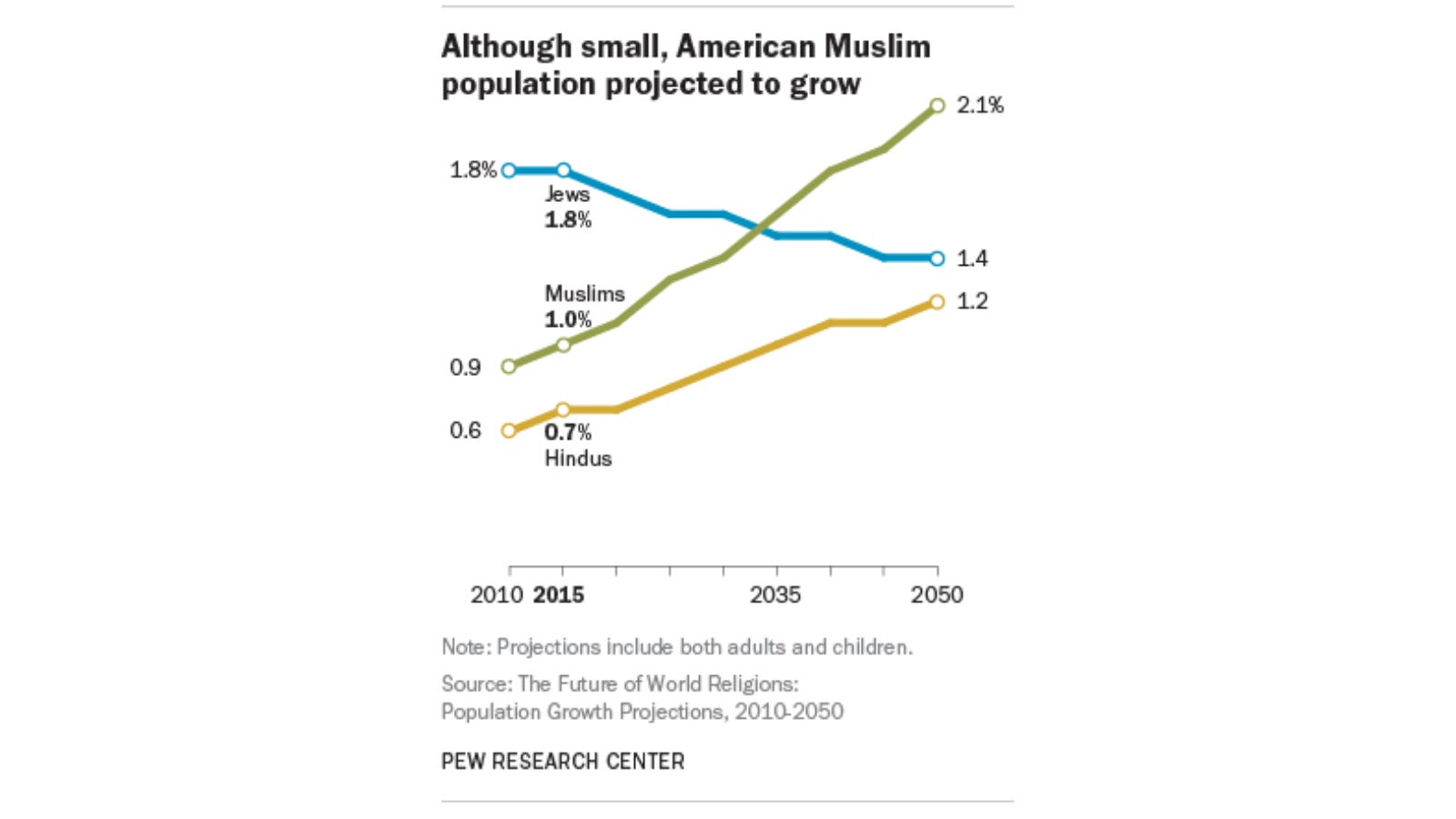
Many on the political Right have quite a problem with this, with many even suggesting that, if the US isn’t careful, we could end up under Sharia law within our lifetimes. (We could get into how American Christians misunderstand what šarīʿah is in the first place, but that’s maybe a topic for another time.) After Zohran Mamdani won the NYC primary, late political commentator Charlie Kirk tweeted the following:
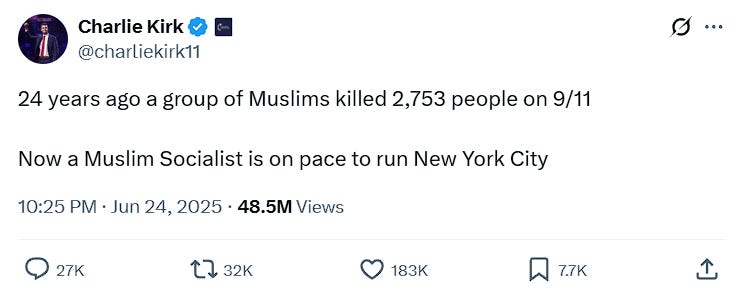
This false equation of Muslims like Mamdani with terrorists who have committed grave evils is not only offensive, but it’s also deeply misinformed, and reeks of a lack of real exposure to followers of Islam and genuine conversation with them about the things we respectively believe.
I think the fears that a lot of Christians have demonstrated regarding the growing presence of Muslims in our society betrays a lot of misunderstandings of Islam, of Muslim people, and of the opportunity we Christians have before us in ministering to people of the Islamic religion.
So, I reached out to a missionary who follows my page, who I know has spent years in ministry to Muslims in Palestine. She, along with 7 other missionaries in MENA (Middle East and North Africa) nations, was kind enough to put together a document responding to common questions sincere American Christians may have about Muslims, their faith, and how we should respond to their growing presence in our nation.
Below is their compiled response, which I hope you find helpful. Ultimately, may we Christians see the growing presence of Muslims in our country not as a threat, but as an opportunity for the Gospel and the evangelization of the nations, right here in our own backyards.
First, a caveat:
We are all people who’ve lived in various countries in the Levant and Northern Africa. We don’t have much experience with Muslims in other areas of the world, and we want to emphasize that Islam is a religion, not a culture or nationality, and Muslims are not a monolith. Just like a North American Christian would have cultural differences with a Christian in South America, Europe, Asia, Africa, or Oceania, Muslims in the Middle East will have cultural differences with other Muslims worldwide. Because of this, most of our answers about Middle Eastern culture also apply to Arab Christians.
1) What do you think American Christians misunderstand about Muslims?
The first thing we want American Christians to know is that Muslims are human beings made in God’s image. Full stop.
The second thing we want you to know is that Muslims are not out to get you. They are a people that love us, love Americans and several aspects American culture, and welcome us with an inordinate level of hospitality. What they don’t love is the blatant immorality they see in many American movies and shows, so when they get to know us as true believers in Jesus and see that we love God and pursue holiness, they go beyond just welcoming us to also respecting us.
The third thing we want you to know is Muslims are people who are trying really hard to honor God. For Arab Muslims this means things like praying five times a day, fasting during Ramadan, and regularly giving to charity, and their pursuit of holiness is so intertwined with their identity that it affects their entire day and everything they talk about. Arab Muslims love to talk about God. It’s so much easier to share the gospel with a Muslim in the Middle East than with the average American because it’s not a taboo subject and there’s constant, rich dialogue surrounding theology in normal places like the dinner table and coffee shops.
The fourth thing we want you to know is Arab Muslims understand some of Jesus’s teaching, such as the Good Samaritan story, better than Westerners. They understand going out of their way to help people, even at extreme detriment to themselves, and truly loving their neighbor. In fact, if the American Church understood the Good Samaritan parable like they should, these questions about Muslims wouldn’t even need to be asked because American Christians would have figured them out through interactions with their Muslim neighbors, and love would have already replaced the fear.
The fifth thing we want you to know is though Muslims’ committment to holiness is admirable, they need the gospel. We desperately want them to know that God already loves them and has made a way to reconcile them to Himself through the death, burial, and resurrection of Jesus. Theologically, they don’t understand the difference between atoning for your sins vs. making a God who has already atoned for your sins happy.
So that leads to the sixth thing we want you to know that is actually something we want you to do. We want Christians in America to love their Muslim neighbors, get to know them, and share the gospel with them.
2) Why are some Muslims extremists and some not?
There are Muslim extremists for the same reasons there are extremists in every religion, group, philosophical track, political party, and even hobby.
The main reason is because people are in pain, pain becomes part of their identity, and they want something to hold on to. The most effective America ever is in foreign policy is when we reach out with food and aid in order to ease pain. The same is true in the Church when we bring a cup of cold water in the name of Jesus. We create MORE extremism when we reach out with bombs and harm. The reason there’s more extremism in some areas of the world, like the Middle East, is because WE (Westerners, mostly post-World War II) have reached out with bombs and gerrymandering and greed and king-making.
The second reason is because people are deceived. There are people who want to please God, and that’s exploited by leaders who use religious texts as an excuse for power and personal gain. Think of the Crusades when Christians slaughtered people because they were told by their leaders that it would please God. If you combine this desire to please God with the pain from the first reason, the exploitation is even easier.
3) When a Muslim comes to Jesus, is it true that their life will be threatened as an apostate?
We’ve seen this run the whole gamut. In most countries there’s freedom of religion and the state won’t go after them and will even punish any individuals who do. Where we live, a Muslim has complete freedom to walk into a church and ask to be baptized as long as it’s their own choice and not done under compulsion. It will be a bit of a process to change their paperwork, but there’s freedom to do so. The same is true of many countries over here.
On a domestic level, it is totally dependent on the family and clan. Sometimes it just means their families express sadness at their choice. Sometimes it means something a bit harsher like their families won’t talk to them or invite them to holidays. Sometimes it means their community lashes out and they lose their job. We have definitely seen examples of people who’ve had to leave their families for fear of their safety, though out of all of us we only know of one person who’s actually been killed, and that was in another country and is a story from friends of friends. We also know a lot of families who, while the first generation faced some pushback from the community for converting, after that they were considered a Christian family in subsequent generations. We imagine somewhere along the lines of our own families, someone had to be that first generation to make the jump, and we now reap the benefits. What a privilege to be there to help an entire family line make that jump!
For refugees specifically, who are away from their community and extended family, the domestic threat is removed. So again, we’d call on American
Christians to share the gospel with their Muslim neighbors who are oftentimes separated from extended family.
4) How can someone effectively share the gospel with a Muslim friend?
Talk to them. Befriend them like they’re a normal person because they are. Invite them over. Respect them and don’t serve things like pork or alcohol just like you wouldn’t serve meat to a vegetarian. How do you share the gospel with any of your neighbors? Apply most of the same ideas to Muslims because, again, they’re people.
For Arab Muslims specifically, remember that they like to talk about God, so that helps open the conversation. You are going to have to overcome specific theological barriers. One of those, which we assume most American Christians probably don’t know, is that a lot of Arab Muslims are universalists. They believe you’re fine to be a Christian and they’re fine to be a Muslim and that we both actually serve the same God and will likely end up in heaven together as long as we’re not bad people. You have to make it clear that Jesus is the only way because we cannot atone for our own sins. That leads to another barrier which is the idea that we can atone for our own sin through good works. You have to make them realize they’re lost and in need of a Savior before you can share the way to salvation.
For more specific information, look up the book Any-3.
5) Are “Western” values and Islam compatible?
This is a difficult question to answer because we don’t totally understand what Western values are. Islam is already a part of Western society and has been for hundreds of years, so it’s already a component. Muslims have always had a consistent place in American society just like Jewish people, Chinese people, Irish people, Catholics, Protestants, etc. E pluribus unum.
If we’re talking about family values, those are compatible with what Muslims believe. Caring for your community, yes. Education, yes. Literacy, yes. Hard work, yes. Things like freedom of the press and information? Sometimes yes in both the US and the Middle East, and sometimes no in both the US and the Middle East. Equality? Sometimes yes in both the US and the Middle East, and sometimes no in both the US and the Middle East. Abortion? No. Transgenderism? No. Nudity in the media or out in public? No. I think conservative Christians in America need to realize that Muslims are actually their ally on a lot of cultural issues.
We do feel like we all need to be careful with this question. Why do you care about western values? Are you trying to build the Kingdom of the West, or are you trying to build the Kingdom of God?
6) Do you think Christians and Muslims can peacefully coexist?
Yes. We have been for over a thousand years. The thirty-two Mohammads in my phone tends to point to our ability to co-exist. Please listen to and learn from Middle Eastern Christians, the descendants of the first Church, on this topic and learn from them.
7) Are non-extremist Muslims considered “bad Muslims”?
No. Muslims in the Middle East are VERY clear that extremists are not following Islam. They disavow it entirely and will give surah and ayah (chapter and verse) to explain why terrorism is wrong. We’ve heard Americans talk about “dancing Muslims” on 9/11, but in reality, the Americans who were overseas at the time remember everyone apologizing to us for our pain, bringing us food, sitting with us in our grief, and uncategorically condeming acts of terrorism.
People from any religion will use their holy book to justify their actions. The FLDS uses the Bible. Westboro Baptist uses the Bible. The Pharisees used the Torah. All of these groups are or were people trying to follow their
religion and please God and miss or missed it horrendously. This should be a humbling warning to every one of us, not an arrogant boast.
8) What do you respect about the Muslims you’ve befriended?
We respect them for all sorts of reasons just like we would any other human being because they’re human beings.
As far as Arab culture goes (both Christians and Muslims) some things that stick out to us are: generosity, hospitality, kindness, patience, a desire to please God, and a desire to talk about God regularly.
We’ve all been blown away by the way Arabs love us. We’ve never been able to outgive a poor Syrian. We might be able to give “more” from a numbers standpoint, but like the widow giving her last mite, they will give their last whereas we won’t. Even if we, as much, much richer people than refugees, can buy something for us to eat when we’re visiting, they will still insist on buying something, making something, and feeding us.
When an Arab loves you, they will fight for you. You are now a part of their family. They will act as if their life depends on your well-being.
Just to give a story to this, one of the couples answering this question once moved into a Palestinian refugee camp. They weren’t given a budget by their company for the move, so leaving behind a furnished apartment in town meant they didn’t end up with much to take with them to the new house. When the neighbors from the camp visited them to welcome them, they saw that all they had to sit on was a couple of cushions on the floor. The next day, a couch appeared on their porch.
You can’t outgive Arabs.
9) Are you alarmed by the Muslim presence growing in the US?
Not even a little.
Historically, no immigrant culture that’s come to the US after its inception has ever “dragged down” the culture in spite of all the propaganda to the contrary. Not the Irish or the Italians or the Chinese or the Swedish or the Japanese or the Indians.
Biblically, one of the things God calls us to do is welcome. This idea that they’re “taking over” or that we should be afraid of them is indicative of fear and othering, not welcoming. Why are we making this us vs. them? We don’t battle against flesh and blood. Any time you’re responding to people in fear, you’re disobeying Jesus and holding onto sacred cows.
We’re more fearful of people in the American Church living idolatrous, disobedient lives under the name of Christ than we are of lost people acting lost. We’re excited to see those idols torn down.
Jesus gave us the Great Commission, and now He’s making it REALLY easy for you to fulfill it. He’s bringing the nations to you so you don’t even have to “go” anymore. Obey Him. Share the gospel.
The Christians dying in Nigeria are being killed by Muslims. The grooming gangs in England are primarily Pakistani Muslims, and it is lower class English girls they prey upon. Muslims in Western countries are praying in the streets to show their dominance; praying in the streets isn’t a normal Muslim practice. Muslims in Dearborn, Michigan, are broadcasting the Muslim call to prayer five times a day.
Brigitte Gabrielle of Act For America knows firsthand what happens when Muslims take over a country. The moderate Muslims turn against their former Christian friends, going along with the radicals. Her family in Lebanon hid for years in a bomb shelter in their back yard when the Muslims took over there.
Of course God loves Muslims and wants to save them. Many are converting to Christianity. But God also does not expect us to fool ourselves about their intentions. It is a religion that inspired its adherents to conquer and Islamize all the previously Christian lands in the Middle East and beyond.
A lot of hard truths were left unsaid here. I know you mean well, but very unhelpful article.